Courage at sea – tips for fearless surfing

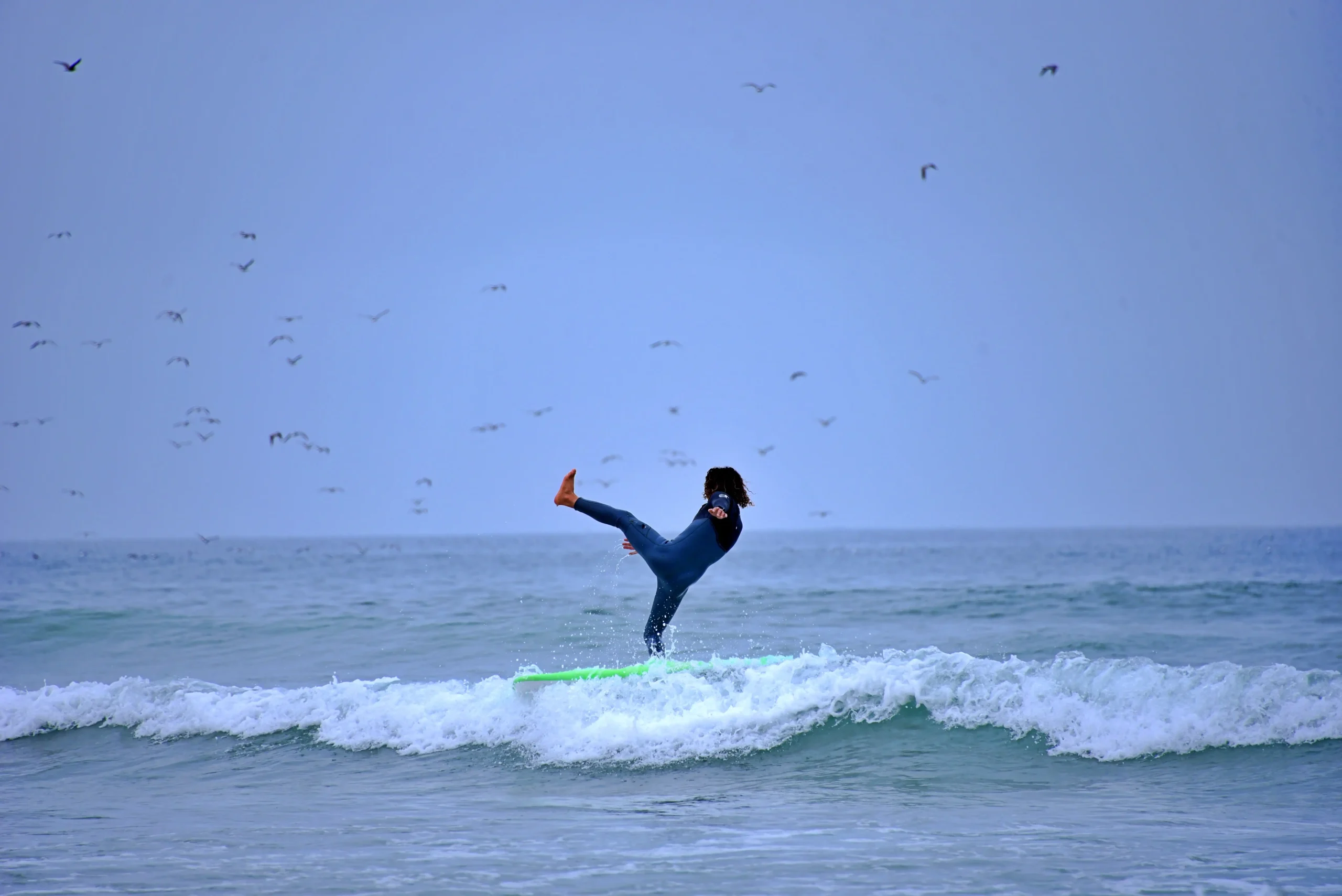
Surfer beim Kick-out

Table of Contents

Want to surf bravely? Here are a few tips on how to glide fearlessly over the waves: Fear is a natural emotion that occurs as a result of a threatening or dangerous situation. Fear is a basic survival mechanism that prepares our body for fight or flight responses. Being afraid is absolutely legitimate and fundamentally good, as it protects us from becoming overconfident. However, it should not block us.  

Fear when surfing can be caused by both internal and external factors. To overcome your fear, the first thing to do is to find out where it comes from.    

Internal factors

  • Fear of injury
  • Self-doubt
  • Perfectionism

External factors

  • Current
  • Washing machine
  • Full line-up
  • Underground

You can overcome your fears by training and acquiring knowledge.  

Injuries

You can rest assured: falls when surfing are much less dangerous than when skateboarding or skiing, for example. The water is soft and offers you good protection unless you are surfing in a reef at low tide. Of course, there is the possibility that you will bump into the surfboard and get a few black and white marks. The more speed you have, the harder the impact will be, of course, but it’s still water and not stone.

A good warm-up and a solid fitness level are essential to prevent injuries. Your body is more flexible and less prone to injury.    

Self-doubt

You may not have been afraid of your first tough wipe-out. Do you think that everything that has worked so far will suddenly stop working? When surfing, a lot of precise things have to be done at the right time. The playing field, the ocean, changes with every wave and no two waves are the same.

Surfing theory is the key to being able to judge which wave is good. The more knowledge you have, the better. Try to learn from every wave, whether you get it or not.

Take your time, learning to surf is a process in which you will learn a lot about yourself.    

Perfectionism

Do you want to learn to surf? Perfectionism is the wrong approach. Because the harder you try, the less likely you are to succeed. Work on your surfing mindset, only with the right attitude will you succeed. You have to learn to put your ego to one side. It’s not about doing everything to perfection right from the start. You probably already know: the best surfer is the one who has the most fun! If you are too tense, your body is probably also very tense. As a result, you’ll put too much pressure on the surfboard and nothing will work properly. We want to glide along the wave, so take the pressure off and be relaxed. The more you are in the flow, the greater the chance that you will become one with the next wave.

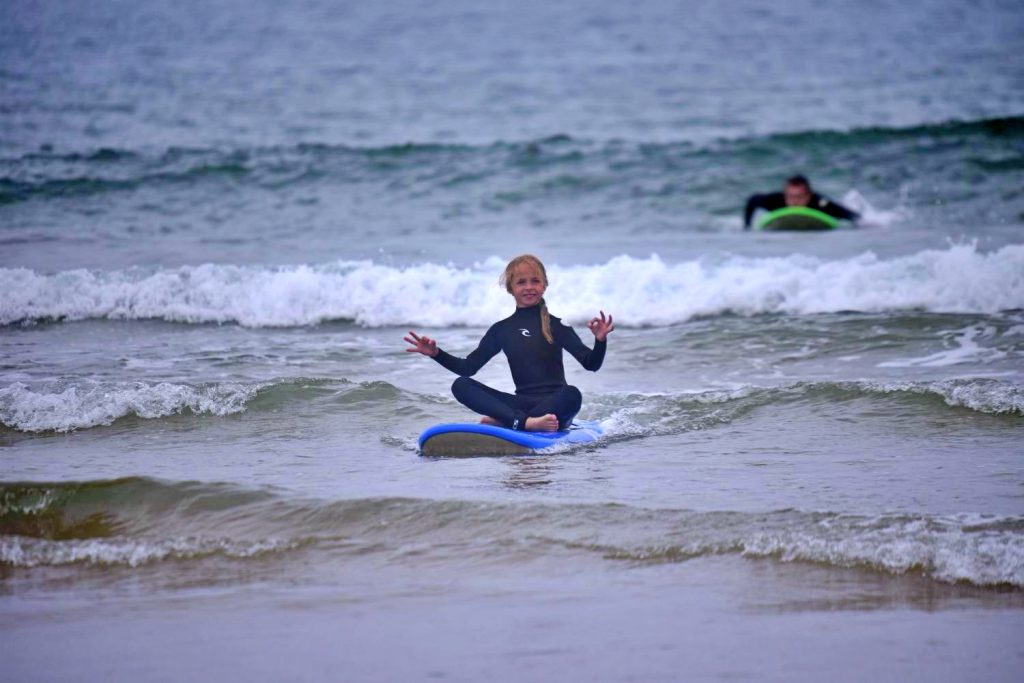
Little girl sitting in yoga pose on the surfboard and floating

Playground

The ocean is stronger than any surfer out there, that’s a fact. In the water, we need to have the situation under control. If that’s not the case, we mustn’t panic. 

If external factors make you feel uncomfortable, the best way to counter them is with knowledge! Knowledge is power. The more you familiarise yourself with surfing theory, the less the conditions will surprise you. And even if they do, you’ll know how to react.    

Take a good look at the spot before you go into the water and take as much time as you need. Choose a beach break with a sandy bottom and no reef until you feel confident. 

Washing machine

You won’t get every wave you paddle into. Maybe you’re not in the right position, maybe the wave is already too steep or you hesitate too long when paddling out or end up messing up the take-off. Whatever the cause, a round of the washing machine is simply part of surfing.

In a washing machine, you have to stay relaxed and not fight the undertow. The wave washes you through and spits you out again. If you fight against it, you will only hurt yourself. If you lose your orientation, grab the leash. The board always floats on top. It feels longer than it actually is, but you have enough air to surface again. Just give in to the situation, then you’ll have more air reserves and the wave will let go of you sooner. Yoga and surfing go together perfectly because yoga helps you become more flexible, focussed and calm. You learn how to work on your breathing technique and thus gain more air reserves, which gives you more power and less anxiety when surfing.

When waves literally grow over your head

You know you can cope with a washing machine, but sometimes the waves are just too big for you? Not every big wave is always powerful. When you paddle out into the line-up, you immediately feel how powerful the waves are. If the waves are big and really powerful and you don’t feel comfortable, then just stay in white water for the day and work specifically on your take-off or turns. Slowly expand your comfort zone to avoid developing even more fear, but don’t stay exclusively in your head comfort zone.   

If the waves are less powerful, then dare! Try to paddle into the wave a little earlier and start deeper in the wave. The drop will still build up in front of you. Don’t look down, look in the direction you want to ride the wave. If you manage not to get in your own way mentally, you will emerge from the water with a big smile on your face even after a possible washing machine. If you approach bigger waves step by step, you will quickly gain confidence and realise how much fun it is to surf a big wave. 

Busy Spot

If you have difficulties with a crowded spot, learn more about surfing etiquette. It is also advisable to avoid surf spots where there are numerous surf schools in the water. You will feel safer if you know how to react.

Beginner surfers are difficult to calculate. Keep your distance, let the surfers in front of you ride an earlier wave so that you have a clear run and can concentrate only on yourself.    

Take your time

You will see: You’ll become more confident every time you practise. And with every new piece of information you learn, a little bit of fear will disappear. So go on: practise, practise, practise! And: get fit, because that will give you the power you need. And: learn as much as you can about surfing. 

Related Posts

A good surf school

How to recognise a good surf school 🌊
Learning to surf on your own can be dangerous and frustrating. A good surf school makes all the difference — with qualified instructors, small groups, lessons adapted to your surf level and personalised feedback. Find out what really matters when choosing a surf school and how to spot professional coaching that helps you progress safely and quickly in the water.

Read More
Theoretical briefing on the beach for surf students on turning in the waves with dry exercises

5 tips for surf beginners – how to master your first waves 

5 essential surf tips for beginners 🏄‍♂️
Learning to surf on your own is risky and time-consuming. With the right surf school, equipment and preparation, you’ll progress faster and stay safe in the water. From choosing the right surf spot and warming up properly to paddling technique and board selection – here’s what every beginner should know before catching their first real wave.

Read More
View of the Imsouane with its perfect waves

The top surf spots around Agadir – Discover Morocco’s best waves

The best surf spots around Agadir 🌊
From world-class right-handers at Anchor Point to the long, mellow waves of Imsouane – Morocco’s Atlantic coast is a surfer’s paradise. This guide introduces the most famous surf spots around Agadir, with insider tips on conditions, tides and skill levels. Discover where to find the perfect wave for your next surf session in Morocco.

Read More