
A good surf school

Contents

Would you like to know how to recognise a competent surf school?

I would like to briefly reiterate that it is not advisable to learn to surf on your own. Surfing is one of the most demanding sports and the playing field, the ocean, is an unpredictable force of nature.

I can only advise you not to learn to surf on your own because it is very dangerous and will cost you a lot of time and energy. It is not only important to make precise movements with perfect timing, but also to know which wave is suitable.

You can acquire these skills with a lot of effort and through tutorials. But the best way to learn to surf is to have someone with you who keeps an eye on you and keeps correcting you. 

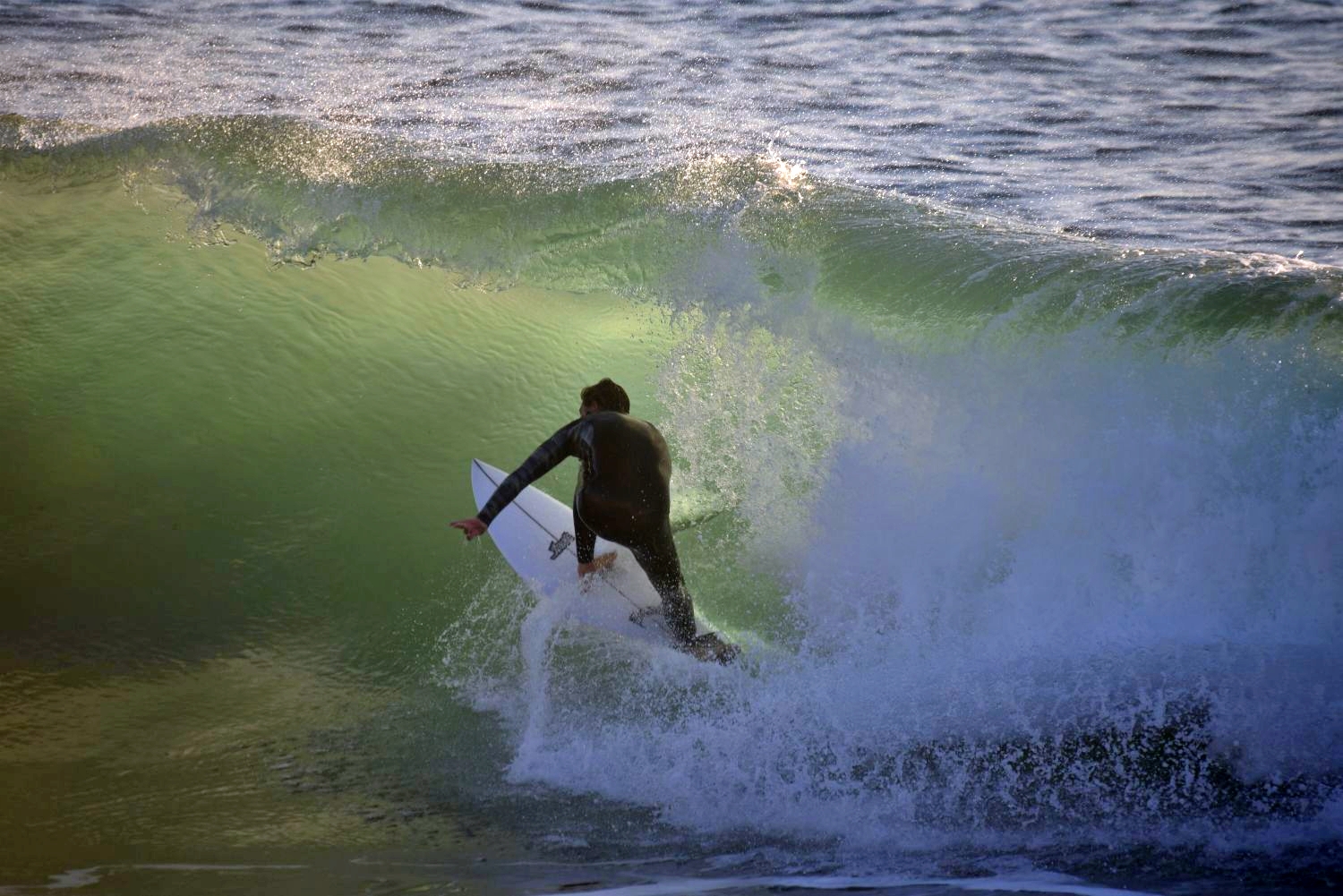
big wave breaks as tube

So if you’re serious about learning to surf and want to make rapid progress, it’s best to find a coach.

In the following I would like to give you a few tips on what you need to look out for when you are choosing a surf school. 

# 1

Teacher to student ratio

A very important feature is the teacher-student ratio. The composition of the group also plays an important role. 

Ideally, a surf instructor should teach five to six students at the same time. If there are more than six students being looked after by a surf instructor, individualised feedback is unfortunately hardly possible. But that’s exactly what it takes to gain confidence and make progress.  

Everyone is different and has different needs. The more individuality in the water, the more difficult it is to cater to these needs. 

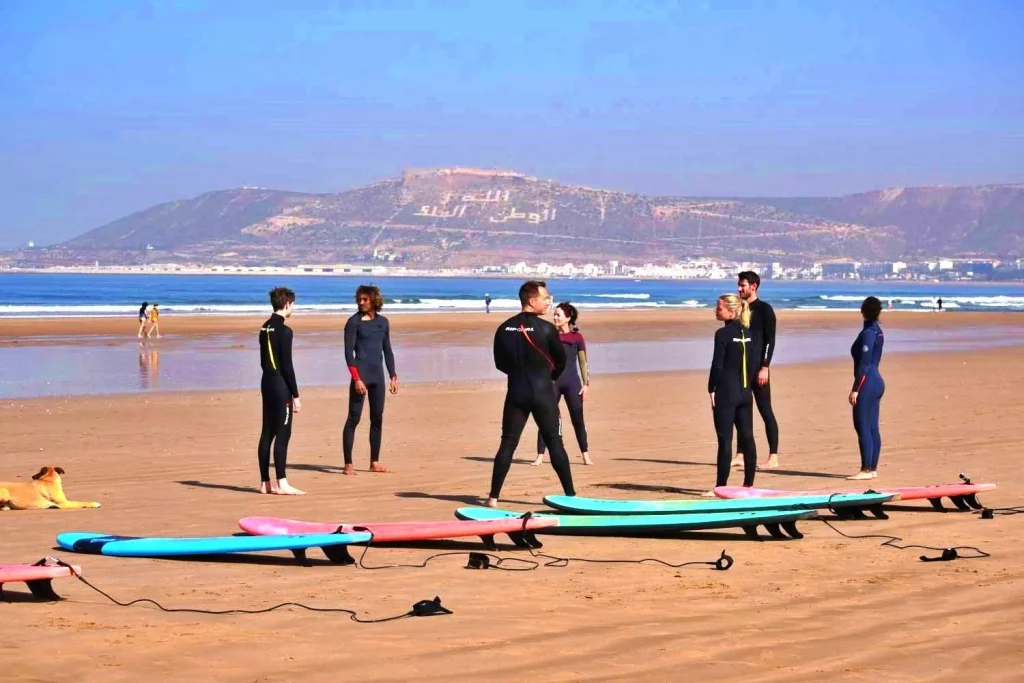
Surf students warm up for the surf course on Agadir beach
# 2

Courses by surfing level

It is also very important to us that different courses are offered for each surfing level. 

A surf instructor cannot teach beginners in white water and intermediate surfers in the line-up at the same time. The respective surf levels have completely different requirements and learning objectives that need to be taken into account. 

An intermediate surfer is underchallenged in white water and gets bored. A beginner simply has no business in the line-up. They won’t have any fun there, but will probably be scared after the first wash at the latest. 

A professional surf school offers you the opportunity to take part in courses for different levels. This allows you to develop according to your individual needs and personal surfing level.  

Advanced surfer often have very specific learning goals, and a private course is often the better choice for them.  

# 3

Course concept

You can often tell whether the surf school has a course concept by whether different courses are offered for different surfing levels and whether surf theory plays a role in the lessons. When making an appointment, the surf school should definitely ask about your surfing level. On the one hand, in order to choose the right course, but on the other hand, of course, to take into account the right surfing conditions for your level. If possible, the course programme should be described on the website. 

In a reputable surf school, every course starts with a theoretical introduction and a warm-up session. Even if you just want to try out surfing and are not interested in a lot of theory, the safety briefing is an absolute must in order to recognise sources of danger and behave correctly. If you’re serious about learning to surf, it’s important to familiarise yourself with surfing theory. If you understand how waves are created and what tides and currents are all about, you will be able to move around in the water much more safely and choose the right waves. 

A good surf school is characterised by the fact that you are not just driven to the spot and the surf instructor constantly pushes you into the white water waves and cheers you on. Before every course, you should be given a briefing on the spot and be made aware of possible sources of danger and currents. Intermediate surfers in particular should receive more detailed information. The spot should be observed closely together. How big are the waves today? Where and how do the sets arrive? Where do you position yourself in the line-up and where do you paddle out? 

There should be an effective warm-up and the participants should receive constant individual feedback during the course. On multi-day courses, the course content builds on the previous day’s knowledge each day and there is a specific learning goal to work towards together each day. A one-week beginners’ course covers both theoretical and practical aspects. The theoretical part can take place on the beach, or during your time in the water for the wave theory. The practical part consists of initial gliding exercises in the water, paddling technique, balance training, pop-up technique, timing and changing direction. You should also have had your first experience of green waves in a beginners’ course.

# 4

Qualified surf instructors

A good surf instructor should be an experienced surfer themselves and have training that qualifies them to teach surfing. 

The ISA (International Surfing Association) surf instructor training is internationally recognised.  The training has different levels and ranges from training as a surf instructor for beginners to surf coach for surf competitors and specialised surf instructors for teaching people with disabilities. 

The decisive factor is that the surf instructor should have the ability to impart their knowledge in a targeted manner and have a trained eye to recognise both the strengths and weaknesses of their students.    

There are numerous other, mostly country-specific qualifications. However, it is not possible to go into these in detail here. 

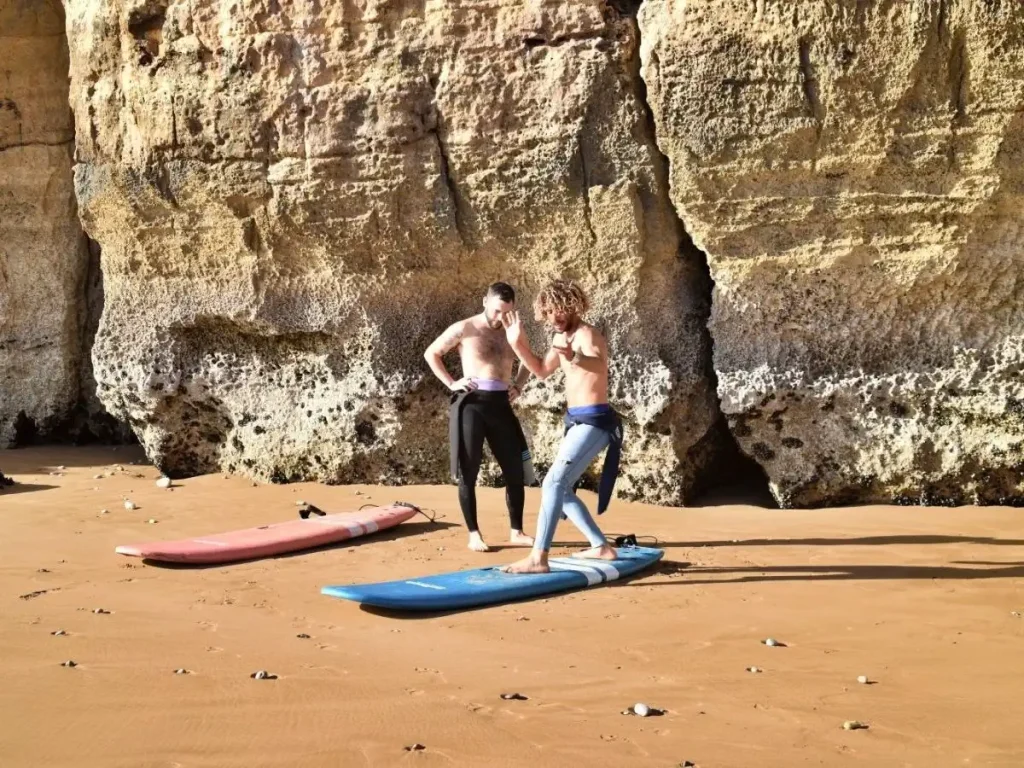
Surf instructor explains turning in the waves on the beach
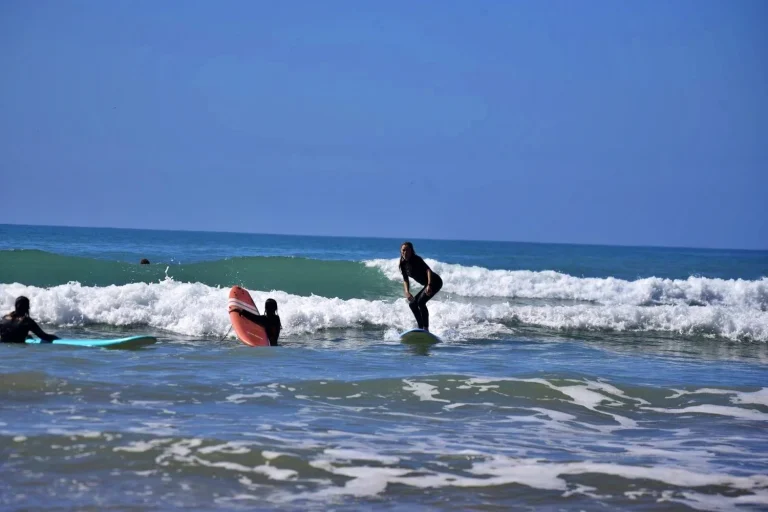
Beginners' surfing course: students gain their first experiences in white water
# 5

Surf spot

If a surf school offers surf lessons at the same spot at the same time every day, this is suspicious.  

The tides influence how and when the waves break, as does the current. On average, there are four tide changes a day. The cycle between high and low tide usually lasts 6 hours and 12 minutes. 

It is simply impossible for a spot to always offer the same conditions at the same time every day.  

The surf quality is also influenced by the wind, the swell direction, the period, the wave size and sandbanks. 

A good surf school is mobile and flexible and is orientated to the tides. 

# 6

Surf equipment

Good equipment is really important, both for your safety and so that you can learn effectively. A surfboard that has deep dents or cracks is no longer as stable and will affect your riding behaviour and control. 

If you are looking for a professional surf school, also pay attention to how the equipment is handled there. Well-maintained and regularly serviced equipment is a good sign and shows an appreciation for your safety and well-being. Wetsuits that are worn out and poorly cleaned are not only unhygienic, they also don’t keep you warm. And if the surfboard is broken, this is clearly a safety risk. 

It is often recommended that a surf school should have a large selection of different boards, which is perfectly understandable. It is usually beginners and surfers with an intermediate level who attend surf schools.  Unfortunately, surfboards are not cheap and even if they are not used, they age over time. Even the best storage and maintenance measures cannot stop the natural ageing process of the board. Over time, the joints and resin can give way, causing the board to lose strength, even if it is not used at all. 

It is also always a question of the location of the surf school as to what type of surfboards should be available. If the waves tend to be small to medium sized and allow for smooth, endless rides, then these are the perfect conditions for longboards. If the surf school is located at a spot where there are larger, very powerful and steep waves, then a good selection of shortboards should be available. 

A sustainable solution is if a surf school does not have a variety of shortboards that are rarely in use. Instead, a collaboration with a surfboard hire company can be a good option.  A surf school should have a variety of softboards so that the right board is available for every size and body weight. It should also have a selection of hardboards that are well suited as a transition from softboard to hardboard. 

# 7

Feedback

Individual feedback is crucial to improve your skills in a targeted manner. This is only possible if a maximum student-teacher ratio of 1:6 is maintained.  A good surf instructor will recognise your weaknesses very quickly and give you specific instructions on how to correct them. 

Any progress will be celebrated, but sometimes you will have to put your pride to one side and take criticism, you will make mistakes and that’s a good thing because you can learn from them. What you will definitely hear from your surf instructor is “paddle harder”, no matter how hard you paddle. However, this shouldn’t be the only thing, because ultimately it’s not all about strength, but rather the right technique. 

It’s also okay if your surf instructor pushes you into a wave from time to time, as you should gain experience in the waves. However, if you are only pushed, your surf instructor only sees you from behind and can’t really judge your pop-up technique and therefore can’t correct it. If you are only ever pushed, then you won’t be able to surf independently and will be dependent on someone pushing you into the wave. A good surf instructor doesn’t go easy on you, but prepares you to surf independently by giving you feedback. 

Video and photo analyses are ideal, although they will most likely be very sobering for you. You surf your first waves and it just feels great, then you see the pictures and are initially disappointed by how small the waves are. This is completely normal, an image analysis takes away the illusion, but also offers you the opportunity to objectively check your technique and learn from it. 

# 8

Empathy

Waves are powerful and can be damn scary. Anyone who didn’t grow up right by the ocean and isn’t half fish, half human feels an underlying fear. You’re in the line-up and the tune ‘Duh duh, duh duh’ starts in your head, but you try to ignore it and hope the shark eats someone else first.  

Maybe you’re more intimidated by the size of the waves or you’ve already been through a “washing machine” or two and don’t feel like repeating it. Fear is a good reflex that protects us from danger. However, if it becomes too overwhelming, it can get in our way. 

A good surf instructor is empathetic. He knows that you are insecure and takes away this insecurity. To do this, they will challenge you in a safe environment. In a “washing machine”, it’s all about keeping your wits about you and not resisting. The wave spits you out and you’re not surfing in really dangerous conditions such as Pipeline or Nazaré. 

A good surf instructor recognises your fears and knows how to help you overcome them. At the same time, they will challenge you to expand your comfort zone.

"Dance with the waves, move with the sea. Let the rhythm of the water set your soul free.

Related Posts

Surfer beim Kick-out

Courage at sea – tips for fearless surfing

How to overcome fear in surfing 🏄‍♀️
Fear is part of surfing — and that’s okay. The ocean is powerful, but with the right mindset, knowledge and training you can learn to glide over the waves with confidence. Discover what causes fear in surfing, how to deal with wipeouts and how to build courage step by step to surf bigger waves safely and with joy.

Read More